SIG Patient Empowerment
Empowering informed decisions, shared care, and autonomy in Multiple Sclerosis
The Special Interest Group (SIG) Patient Empowerment is dedicated to strengthening the role of people with Multiple Sclerosis (PwMS) as informed, active and confident partners in their care journey. Our work focuses on shared decision-making (SDM), evidence-based patient information (EBPI), self-management support, and the broader behavioural and social factors that influence health outcomes in MS.
In line with the World Health Organization perspective, patient empowerment is understood as “a process in which patients understand their role, are given the knowledge and skills by their health-care provider to perform a task in an environment that recognizes community and cultural differences and encourages patient participation” [Patient empowerment and health care. Available from: https://www.ncbi.nlm.nih.gov/books/NBK144022/].
Based on internal discussions and feedback collected during the SIG meeting at the RIMS Congress 2024, the group decided to reframe its original identity from “Patient Autonomy” to “Patient Empowerment”. While autonomy remains a key concept, the renewed SIG adopts a broader perspective that also includes health behaviour change, educational approaches, and the social determinants of health. This shift reflects the need to support PwMS not only in making informed choices, but also in navigating lifestyle challenges, social inequalities, and structural barriers to care.
Across all domains, the SIG Patient Empowerment pursues two main aims. First, to describe the current state of patient empowerment, health behaviours and social inequalities through high-quality qualitative and quantitative research in PwMS, ideally in a transnational context. Second, to develop practical and easily implementable interventions, with a strong focus on web-based tools that can be widely accessible across different healthcare systems.
In the area of empowerment, the SIG continues to work on evidence-based health information and decision-support tools. Current and future topics include bladder management education, motherhood and family planning, and immunotherapy decision-making. The group also supports resilience-oriented interventions, such as Acceptance and Commitment Therapy, in collaboration with members of the SIG Mood & Cognition.
Health behaviours represent another core focus. The SIG promotes evidence-based information on the benefits and risks of behaviours such as smoking, physical activity, nutrition, stress management, and treatment adherence. Beyond information provision, the group highlights practical strategies that help PwMS initiate and maintain health behaviours in daily life.
The SIG Patient Empowerment also addresses the social determinants of health in MS. Research activities explore how factors such as lower levels of education, financial stress, limited social support, migration background, language barriers and cultural differences influence access to care and health outcomes. Particular attention is given to the needs of marginalised and underserved groups within the MS community.
At the same time, the SIG is actively reaching out to professionals interested in becoming core members of this newly framed group, intending to expand its international and interdisciplinary network.
The SIG brings together professionals involved in Multiple Sclerosis rehabilitation, including clinicians, researchers, and educators, who are committed to enhancing patient-centered care. The group works collaboratively to design, test and share effective decision-support tools across cultural contexts.
The group emerged from collaborations during the 14th RiMS Conference in 2009, initially focused on evidence-based patient education. Over time, the name evolved to “Patient Autonomy” to better reflect a proactive and empowerment-focused approach. The SIG builds on earlier European projects and publications from the MARCH programme, with a vision aligned to the RIMS mission of fostering autonomy and participation in PwMS.
The SIG Patient Empowerment (formerly SIG Patient Autonomy) is looking for its next Chair.
A leadership opportunity to shape international research and practice on shared decision-making, health behaviours, digital tools and social determinants of health in MS.
Lead, connect, and drive patient empowerment forward.
Applications are open until Sunday 15 March 2026.
Learn more about the role, timeline, and application process.
Learn moreNIPS (Needs of people with primary progressive MS: a cross-cultural mixed-methods study) aims to explore the needs of people with primary progressive MS. The project has been funded by the RIMS RIGRA.
The MoMS (motherhood choice in MS) project aims to explore the knowledge as well as information needs regarding pregnancy among people with MS. The project has been funded by an independent association in Germany.
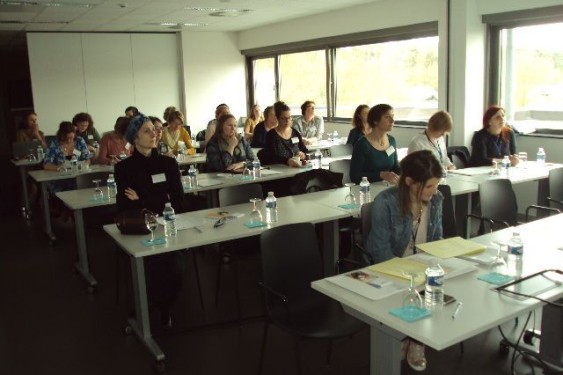
The SIG Patient Autonomy keeps its network engaged through dedicated annual meetings and collaborative working sessions, where members discuss ongoing studies, explore new intervention ideas, and plan multi-country projects aimed at strengthening patient autonomy and shared decision-making in MS care. These gatherings also provide a forum for designing and refining practical tools such as decision aids, risk knowledge measures, and SDM training modules.
By combining focused meetings with continuous collaboration across borders and disciplines, the group ensures that evolving research and innovative approaches are shared widely and transformed into meaningful outcomes for people with Multiple Sclerosis.
Antonio Schindler
Frederike Adammek
George George
Juliette Van Zuijlen
Piet Eelen
Sverker Johansson
Stephan Ilsbroux
Alexandra Golewska
Line Berthelsen
"Decisions on multiple sclerosis immunotherapy: New treatment complexities urge patient engagement. J Neurol Sci 2011;306:192-7."
Heesen C, Solari A, Giordano A, Kasper J, Köpke S.
"Autonomy preferences, risk knowledge and decision making performance in ms (AutoMS): the Control Preference Scale. Oral presentation at RIMS 2011 Conference, May 13-14 Turku, Finland."
Solari A, Giordano A, Köpke S, Kasper J, Lugaresi A, Pugliatti M, Van Nunen A, Vahter L, Drulovic J, Clanet M, Sharrack B, Fulcher G, Heesen C, on behalf of the AutoMS-group
"Risk knowledge and planned behavior questionnaires – new tools to assess decision-making in MS. Presented as poster at RIMS 2011 Conference, May 13-14 Turku, Finland."
Heesen C, Köpke S, Kasper J, Giordano A, Van Nunen A, Vahter L, Drulovic J, Clanet M, Sharrack B, Fulcher G, Solari A, on behalf of the AutoMS-group.
Take a look at all different publications from SIG Patient Autonomy here.
Become a member of RiMS and get immediate access to our community. Find more info here:
This website makes use of cookies to function properly. If you would like to change which cookies we can use, change the cookie settings. Read more about our use of cookies in our privacy policy.